Italiano in pratica
by Alessio · teacher of Italian for foreigners, ITALS master’s in teaching Italian abroad (Ca’ Foscari University, Venice) and a master’s in teaching Italian as a second language (Giustino Fortunato University, Benevento)
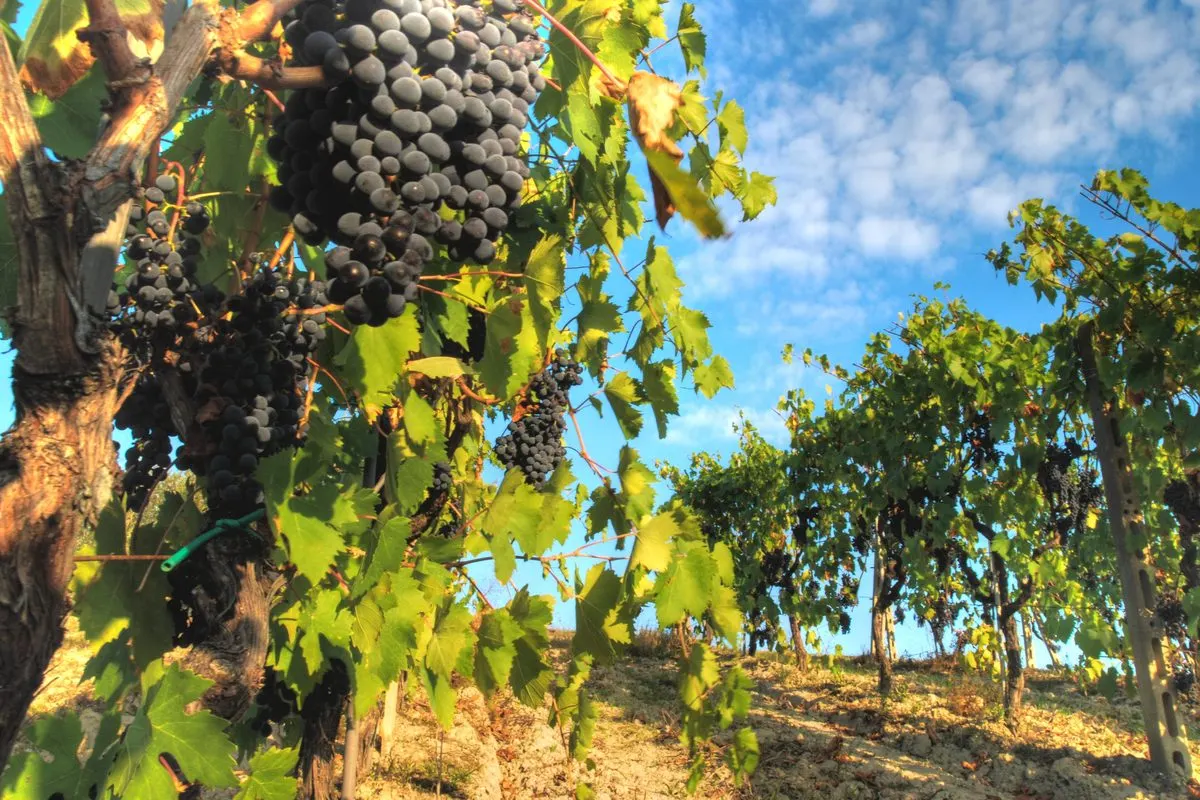
Most wineries, cantine, receive visitors by appointment: book the degustazione, tasting, ahead. In a wine bar, enoteca, you can order al calice, by the glass. And if you drive: the limit in Italy is 0.5 grams per litre, zero for drivers with a licence under three years old.
Chianti, Barolo, Prosecco, Etna: whole holidays are planned around Italian wine. A visit to a cantina is a small conversation with someone proud of what they make, and a few words of Italian make it a much better one.
Here's how to book, how to order in an enoteca, what the label says, and the questions that get a sì or a no.
| Italian | English |
|---|---|
| Si può fare una degustazione? | Can we do a tasting?answer: sì or no |
| Bisogna prenotare? | Do you need to book?answer: sì or no |
| Un calice di rosso, per favore. | A glass of red, please. |
| È un vino della zona? | Is it a local wine?answer: sì or no |
| È secco? | Is it dry?answer: sì or no |
| Possiamo assaggiare anche questo? | Can we taste this one too?answer: sì or no |
| Spedite all'estero? | Do you ship abroad?answer: sì or no |
| Guido io, solo un assaggio. | I'm driving, just a taste. |
Read the Italian out loud once before you need it. The questions marked sì or no get a one-word answer you can understand.
By email, phone or the winery's website, a day or more ahead: many small cantine are family businesses and receive visitors only by appointment, su prenotazione. Ask a closed question: si può fare una degustazione sabato mattina?
A visit usually includes the cellar and a tasting of three to five wines, often with bread, cheese or cured meats; there's normally a fee per person.
| You say | English |
|---|---|
| Si può fare una degustazione sabato mattina? | Can we do a tasting on Saturday morning?sì or no |
| Siamo in quattro. | There are four of us. |
| La visita è in inglese? | Is the tour in English?sì or no |
| È compreso qualcosa da mangiare? | Is anything to eat included?sì or no |
| You hear | English |
|---|---|
| Su prenotazione. | By appointment. |
| La degustazione costa venti euro a persona. | The tasting costs twenty euros per person. |
| Vi aspettiamo alle dieci. | We'll expect you at ten. |
Order al calice, by the glass, or la bottiglia. Say the colour, rosso, bianco, rosato, and ask the closed question that matters to you: è un vino della zona?, è secco? Bubbles are bollicine.
Asking for advice is welcome: cosa mi consiglia? In wine bars a small plate of something to eat often comes with the glass.
| You say | English |
|---|---|
| Un calice di rosso, per favore. | A glass of red, please. |
| È un vino della zona? | Is it a local wine?sì or no |
| È secco? | Is it dry?sì or no |
| Cosa mi consiglia? | What do you recommend? |
| Un tagliere da dividere. | A board of cured meats and cheese to share. |
| You hear | English |
|---|---|
| Rosso o bianco? | Red or white?a choice of two |
| Al calice o la bottiglia? | By the glass or the bottle?a choice of two |
| Lo vuole assaggiare? | Would you like to taste it?sì or no |

DOCG and DOC are protected designations of origin with strict rules on area and grapes; DOCG is the highest level. IGT is a typical regional wine with looser rules. Riserva means it has aged longer than the standard version.
Other words on the label: annata, the vintage, vitigno, the grape variety, imbottigliato all'origine, bottled by the producer.
| You say | English |
|---|---|
| DOCG · DOC · IGT | the three designations, highest first |
| riserva | aged longer than the standard |
| l'annata | the vintage |
| il vitigno | the grape variety |
| È biologico? | Is it organic?sì or no |

In the  amo Italian app you practise inside real-life pathways: il bar, il ristorante, i trasporti, la casa and more, with listening, dialogues and the grammar explained in English. This page gives you the phrases; the app trains your ear.
Half the A1 course free, no sign-up
★★★★★(22)by Alessio, teacher since 2018
Downloadamo Italian for iPhone ↗︎Search for amo Italian
You don't need technical words: mi piace, I like it, è buonissimo, it's delicious, and two pairs of opposites: secco or dolce, dry or sweet, leggero or corposo, light or full-bodied.
To ask for something different, use più: qualcosa di più leggero?, something lighter?
| You say | English |
|---|---|
| Mi piace molto. | I like it a lot. |
| È buonissimo. | It's delicious. |
| Avete qualcosa di più leggero? | Do you have something lighter?sì or no |
| È troppo dolce per me. | It's too sweet for me. |
| You hear | English |
|---|---|
| Le piace? | Do you like it?sì or no |
| Questo è più corposo. | This one is more full-bodied. |

Wineries sell bottles on the spot and many ship abroad: ask spedite all'estero? If you drive, Italy's limit is 0.5 grams of alcohol per litre of blood, and zero for drivers who have had their licence for less than three years. Taste and spit, or let someone else drive.
There's no shame in saying guido io, solo un assaggio: wineries are used to it and often have a spittoon.
| You say | English |
|---|---|
| Spedite all'estero? | Do you ship abroad?sì or no |
| Prendo sei bottiglie. | I'll take six bottles. |
| Guido io, solo un assaggio. | I'm driving, just a taste. |
| Avete una scatola? | Do you have a box?sì or no |
| You hear | English |
|---|---|
| Spediamo in tutta Europa. | We ship all over Europe. |
| Gliele imballo bene. | I'll pack them well for you. |
In Italy wine is part of the meal rather than an evening in itself. A glass with lunch is ordinary, a bottle shared over dinner is ordinary, and few people drink wine without food in front of them. What is not ordinary is getting drunk in public, which is frowned upon at any age. Visitors used to rounds in a British pub or to weekend drinking in Scandinavia often notice how slowly Italians drink, and how little.

Italy is the largest wine producer in the world, with about 44 million hectolitres in 2024, ahead of France, and every one of its twenty regions makes wine, much of it from native grapes. The result is fiercely local drinking: in Piedmont you are offered Barbera and Nebbiolo, on Etna the wines of the volcano, and the best thing to order is almost always the wine from the hills around you. The house wine, vino della casa, served in a carafe, is usually local and perfectly respectable.
A few habits around the glass: Italians toast with cin cin or salute, looking each other in the eye, and some still think toasting with water brings bad luck. If you don't want more, leave your glass nearly full, because an empty glass gets refilled. Alcohol may not be sold or served to anyone under 18, and the drink-driving limit, 0.5 grams per litre and zero for new drivers, is enforced with roadside checks.
Read next: Why does nobody bring you the bill in an Italian restaurant? · Why are Italian town centres closed to cars?
Italians rarely answer with a bare sì or no. These are the forms you will actually hear, so you know which way the answer went.
| You hear | English | It means |
|---|---|---|
| Sì, certo. | Yes, of course. | yes |
| Certo! | Sure! | yes |
| Come no! | Of course! (literally: how not?) | yes |
| Volentieri. | Gladly. | yes |
| Va bene. | Fine, OK. | yes |
| Prego. | Go ahead / please do. | yes |
| No, mi dispiace. | No, I'm sorry. | no |
| Purtroppo no. | Unfortunately not. | no |
| Non c'è. | There isn't any. | no |
| È finito. | It's sold out / all gone. | no |
| Non si può. | That's not allowed. | no |
| Non ancora. | Not yet. | no |
Six real replies. Tap Yes or No for each one.
The grammar behind them
This guide as two printable pages, in English: the phrases to say, the yes/no questions and what you will hear.
All 43 phrase PDFs · €9Already included in the full course · €39 a year.
Or keep the eight phrases as an image, to save on your phone or pin:
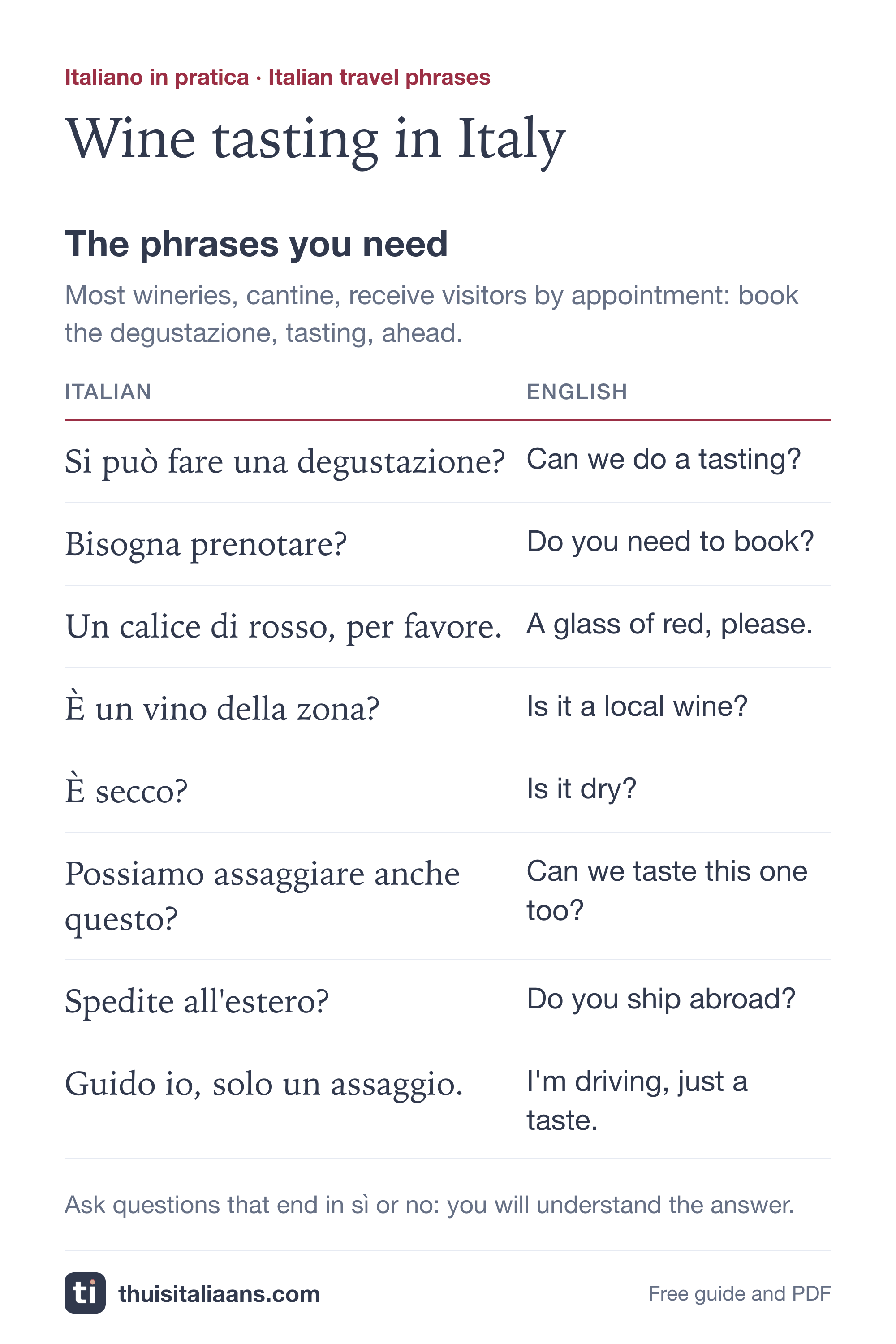 Italian phrases: Wine tasting in Italy
Usually yes: many wineries receive visitors only by appointment («su prenotazione»). Book a day or more ahead, especially at weekends.
By the glass. «La bottiglia» is the whole bottle.
Both are protected designations of origin; DOCG has stricter rules and is the highest level. IGT is a typical regional wine with looser rules.
0.5 grams per litre of blood, and zero for drivers who have held their licence for less than three years.