Italiano in pratica
by Alessio · teacher of Italian for foreigners, ITALS master’s in teaching Italian abroad (Ca’ Foscari University, Venice) and a master’s in teaching Italian as a second language (Giustino Fortunato University, Benevento)
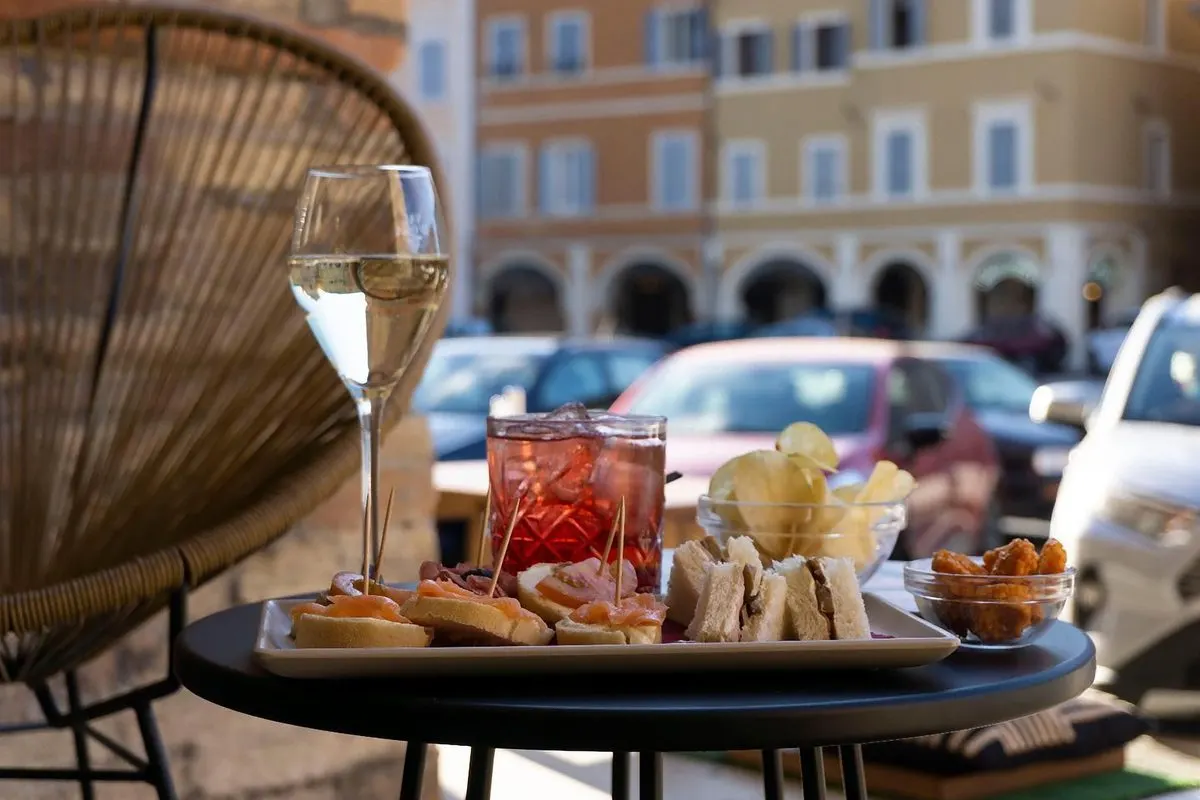
The evening starts with l'aperitivo, a drink with something to eat, between about six and nine. Clubs often charge an entry fee that includes a drink, ingresso con consumazione, and some cultural clubs ask for a membership card, la tessera. In summer, look out for village food festivals, sagre.
Italians go out late and slowly: an aperitivo, dinner around nine, a walk, maybe music after eleven. Whatever you choose, one practical question usually decides the evening: do you need to book, is there an entry fee, is there music tonight?
Those are exactly the questions on this page, all of them closed: the answer is sì or no, so you understand it even in a noisy bar.
| Italian | English |
|---|---|
| C'è musica dal vivo stasera? | Is there live music tonight?answer: sì or no |
| Bisogna prenotare? | Do you need to book?answer: sì or no |
| L'ingresso è gratuito? | Is entry free?answer: sì or no |
| La consumazione è compresa? | Is a drink included?answer: sì or no |
| Serve la tessera? | Do you need a membership card?answer: sì or no |
| Fate l'aperitivo? | Do you do aperitivo?answer: sì or no |
| A che ora inizia? | What time does it start? |
| Ci sono ancora biglietti? | Are there still tickets?answer: sì or no |
Read the Italian out loud once before you need it. The questions marked sì or no get a one-word answer you can understand.
A drink before dinner, usually from about six to nine, served with something to eat: crisps and olives, or a full buffet in some cities. An apericena is an aperitivo big enough to replace dinner.
Classic orders are a spritz, a glass of wine or an analcolico, a non-alcoholic aperitif. The snacks usually come with the drink: ask before you help yourself.
| You say | English |
|---|---|
| Fate l'aperitivo? | Do you do aperitivo?sì or no |
| Gli stuzzichini sono compresi? | Are the snacks included?sì or no |
| Avete un analcolico? | Do you have a non-alcoholic aperitif?sì or no |
| Uno spritz, per favore. | A spritz, please. |
| You hear | English |
|---|---|
| Il buffet è dalle sette. | The buffet is from seven. |
| Aperol o Campari? | Aperol or Campari?about the spritz |

Ask at the bar or at your hotel with a closed question: c'è musica dal vivo stasera? Posters in the street and on bar doors list concerts, and in summer many towns hold free open-air events in the main square.
Stasera is tonight, domani sera tomorrow night, and in piazza in the square.
| You say | English |
|---|---|
| C'è musica dal vivo stasera? | Is there live music tonight?sì or no |
| C'è qualcosa in piazza stasera? | Is there anything on in the square tonight?sì or no |
| È gratis? | Is it free?sì or no |
| A che ora inizia? | What time does it start? |
| You hear | English |
|---|---|
| Il concerto inizia alle dieci. | The concert starts at ten. |
| Stasera no, il venerdì sì. | Not tonight, but on Fridays yes. |
For dinner and popular bars at weekends, booking is wise. Clubs often charge entry, sometimes with a drink included: ingresso con consumazione. Ask both things as yes/no questions.
Some clubs work with a guest list, la lista: being on it can mean cheaper or free entry.
| You say | English |
|---|---|
| Bisogna prenotare? | Do you need to book?sì or no |
| L'ingresso è gratuito? | Is entry free?sì or no |
| La consumazione è compresa? | Is a drink included?sì or no |
| C'è una lista? | Is there a guest list?sì or no |
| You hear | English |
|---|---|
| Quindici euro con consumazione. | Fifteen euros with a drink. |
| Siete in lista? | Are you on the list?sì or no |
| Stasera solo su prenotazione. | Tonight it's by reservation only. |

In the  amo Italian app you practise inside real-life pathways: il bar, il ristorante, i trasporti, la casa and more, with listening, dialogues and the grammar explained in English. This page gives you the phrases; the app trains your ear.
Half the A1 course free, no sign-up
★★★★★(22)by Alessio, teacher since 2018
Downloadamo Italian for iPhone ↗︎Search for amo Italian
Many cultural associations, ARCI clubs for example, are members-only by law: to get in you need a membership card, la tessera, which you can usually buy at the door with an ID. It costs a few euros and lasts a year.
It's not a scam and not a tourist fee: everyone pays it, once. Ask serve la tessera? before you queue.
| You say | English |
|---|---|
| Serve la tessera? | Do you need a membership card?sì or no |
| Si può fare qui? | Can I get it here?sì or no |
| Vale tutto l'anno? | Is it valid all year?sì or no |
| You hear | English |
|---|---|
| Ha un documento? | Do you have ID? |
| La tessera è annuale. | The card lasts a year. |

A sagra is a village festival built around one local food, from mushrooms to wild boar to fried fish, mostly in summer and autumn. Long tables, local volunteers cooking, and often a band and dancing.
You usually order and pay at a till first, then collect your food with the receipt. Ask: si paga prima?
| You say | English |
|---|---|
| Si paga prima? | Do you pay first?usually sì |
| È tutto fatto in casa? | Is everything homemade?sì or no |
| È libero? | Is this seat free?sì or no |
| You hear | English |
|---|---|
| Prima alla cassa, poi al banco. | First the till, then the counter. |
| Chiamiamo noi il numero. | We'll call your number. |
An Italian evening starts later and lasts longer than in Britain or northern Europe. The aperitif comes first, from about six; dinner from half past seven or eight, later in the south and in summer; and then the passeggiata, a slow walk up and down the main street or around the square, to see and be seen, often with a gelato in hand. In summer whole families are out at eleven at night, children included, and nobody finds it strange.

Alcohol is part of the evening but rarely the point of it. The aperitif comes with something to eat, from a bowl of olives to a buffet, and drinks are sipped rather than downed. Getting visibly drunk is a loss of face at any age, which is why visitors used to pub crawls are often struck by how sober a crowded Italian square is at midnight. The Spritz comes from the Veneto and the Negroni from Florence, and both are meant to be drunk slowly.
Much of Italian nightlife happens outside clubs. Towns put on free concerts in the main square in summer, villages hold sagre, food festivals run by volunteers, and cultural associations host music and film nights. Many of those associations, ARCI clubs for example, are open to members only because they are non-profit clubs rather than bars, so you buy a membership card, the tessera, at the door. Clubs in the usual sense open late and fill up after midnight.
Read next: How do Italians drink wine, and how is it different from home? · Why does Italian small talk feel so different?
Italians rarely answer with a bare sì or no. These are the forms you will actually hear, so you know which way the answer went.
| You hear | English | It means |
|---|---|---|
| Sì, certo. | Yes, of course. | yes |
| Certo! | Sure! | yes |
| Come no! | Of course! (literally: how not?) | yes |
| Volentieri. | Gladly. | yes |
| Va bene. | Fine, OK. | yes |
| Prego. | Go ahead / please do. | yes |
| No, mi dispiace. | No, I'm sorry. | no |
| Purtroppo no. | Unfortunately not. | no |
| Non c'è. | There isn't any. | no |
| È finito. | It's sold out / all gone. | no |
| Non si può. | That's not allowed. | no |
| Non ancora. | Not yet. | no |
Six real replies. Tap Yes or No for each one.
The grammar behind them
This guide as two printable pages, in English: the phrases to say, the yes/no questions and what you will hear.
All 43 phrase PDFs · €9Already included in the full course · €39 a year.
Or keep the eight phrases as an image, to save on your phone or pin:
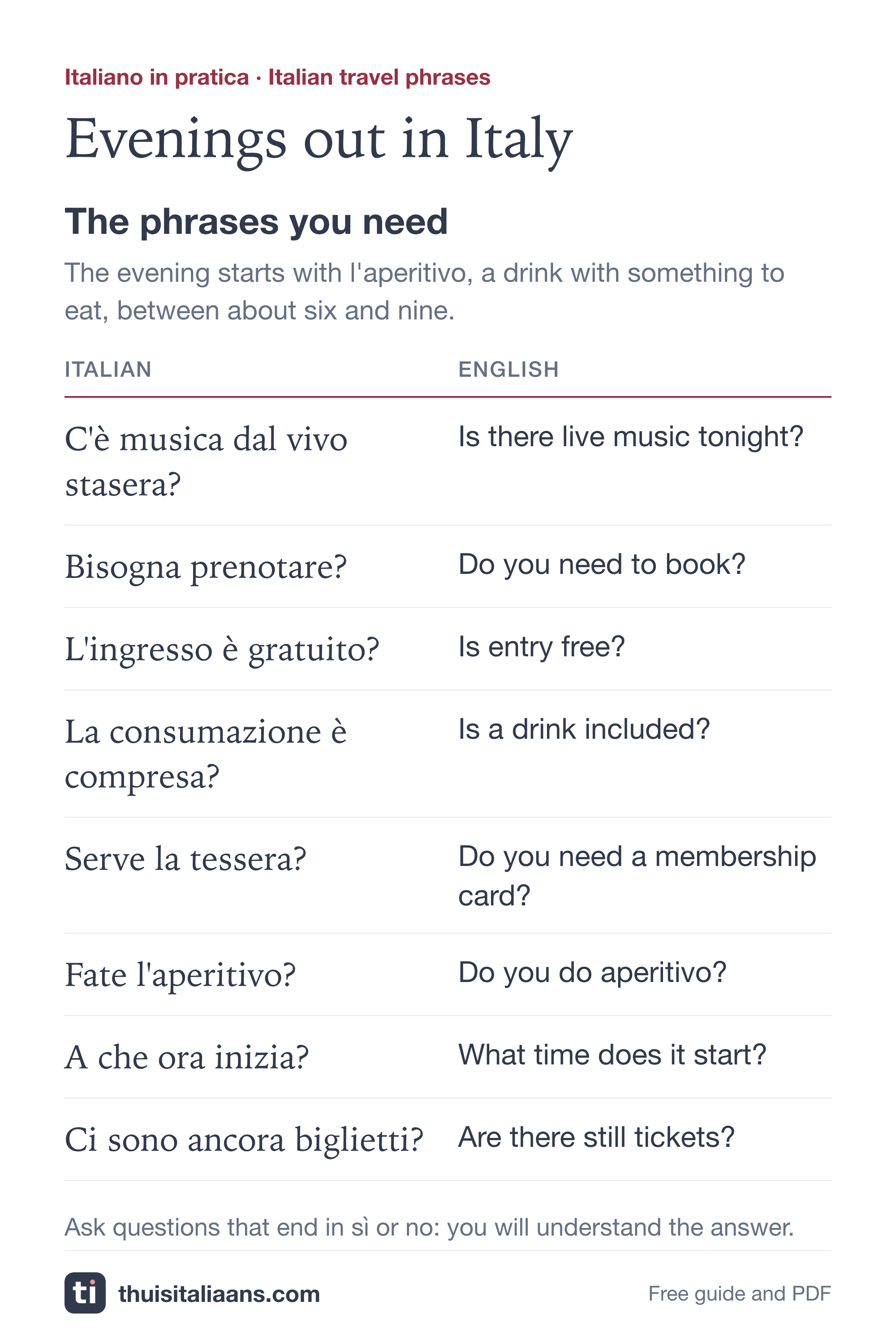 Italian phrases: Evenings out in Italy
Roughly from six to nine in the evening, before dinner.
Entry with a drink included: you pay at the door and get a voucher for one drink.
Many cultural associations, ARCI clubs for example, are members-only. You need a membership card, usually sold at the door for a few euros and valid for a year.
A local festival dedicated to one food, held mostly in summer and autumn, with long tables, home cooking by volunteers and often music.